How much energy do dirty solar panels lose? Real data
After sunlight itself, soiling is the factor that most affects what an installation produces. We explain how much is lost, using data from real studies.
Quick summary
- Worldwide, soiling causes a loss of 3–5% of annual solar PV production [1].
- In controlled tests, dust cut power output by 8.8% and bird droppings reduced performance by 7.4% [2].
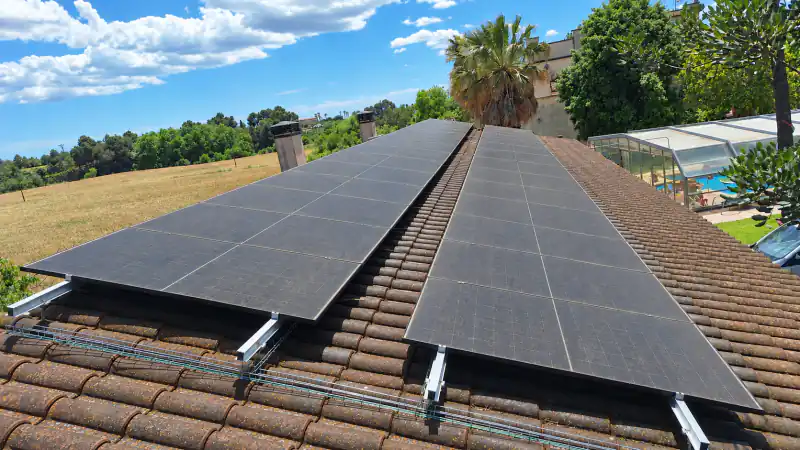
- In Madrid, losses close to 6% have been measured in summer on low-tilt modules [3].
- During very intense Saharan dust events, output in Spain drops by 16–20% [4].
Many people install solar panels and then forget about them. It makes sense: they are silent, have no moving parts and keep producing. But producing is not the same as producing everything they could. The layer of dust, pollen, soot or droppings that builds up on the glass acts like a filter: part of the light is reflected or absorbed before it reaches the cells.
The International Energy Agency (IEA), through its photovoltaic research programme PVPS Task 13, published a dedicated report on this issue in 2023. Its conclusion is clear: after irradiance, soiling is the single most influential factor on performance, and not only in deserts [1].
Why a layer of dust matters so much
The cells in a panel are connected in series. If one area receives less light, it limits the current of the whole string. That is why uniform soiling (fine dust) reduces output gradually, while localised soiling (a dropping, a leaf, mud along the bottom edge) can have an effect far bigger than its size.
A study published in Sustainability measured this under controlled conditions. Covering a quarter of a module's surface cut power by 33.7%; covering half of it, by 45.1% [2]. A panel does not need to look "black" to lose energy.
What the studies say
| Source | What was measured | Result |
|---|---|---|
| IEA PVPS (2023) [1] | Global soiling loss | 3–5% of annual production |
| Mustafa et al. (2020) [2] | Accumulated dust | −8.8% power |
| Mustafa et al. (2020) [2] | Bird droppings | −7.4% performance |
| Polo et al. (2021) [3] | Rooftops in Madrid, 8° tilt, summer | Losses close to 6% |
| Renewable Energy (2025) [4] | Very intense Saharan dust in Spain | −16.3% to −19.8% output |
Think your panels are losing output? We inspect your installation and give you a realistic estimate.
Online quote calculatorThe case of Tarragona and the Mediterranean
Several factors that favour soiling come together in our area:
- Dry summers: weeks go by without rain just when the installation produces the most.
- Agricultural dust on farms, country houses and industrial estates surrounded by fields.
- Saharan dust events, which reduce output while the dust is in the air and then leave it on the panels [4].
- Low-tilt industrial roofs: rain washes dirt away less effectively when the panel is almost flat. The Madrid study measured modules at exactly 8° [3].
- Birds: pigeons and gulls in urban areas and near the coast.
How to tell if your panels are losing output
- Check your inverter app. Compare production on clear days this month with similar days last year, or with production right after heavy rain.
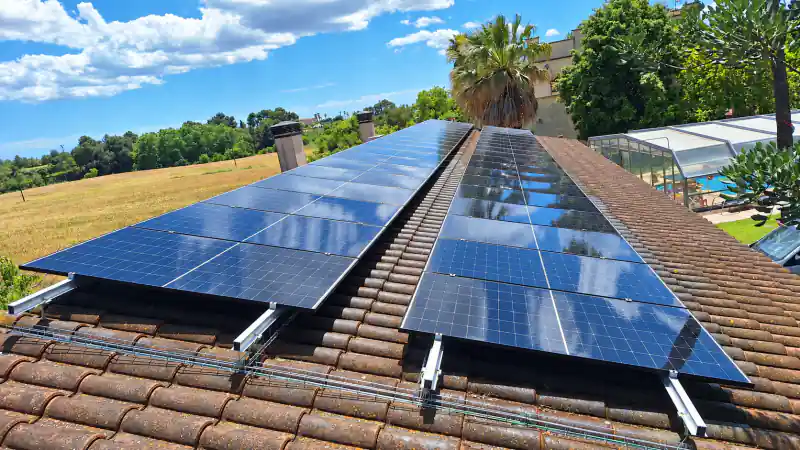
- Look at the panels from the ground or a window. White spots, a strip of mud along the bottom edge or duller areas are clear signs.
- Look at the surroundings. If there are building works, ploughed fields, trees or birds nearby, dirt builds up faster.
Our experience at TARRAMED: with regular cleaning we prevent ongoing losses that are usually between 5% and 15%. In installations heavily affected by Saharan dust or dense agricultural dust, the output recovered after cleaning can exceed 25%. These are our own estimates: every installation is different, which is why we assess it before giving a figure.
Conclusion
Dirt will not break your panels overnight, but it takes away production every single day. At today's electricity prices, recovering 5% or 10% of output usually more than pays for a professional clean, especially in medium and large installations.
Want us to take care of it?
At TARRAMED we clean solar panels with purified water on homes, farms and industrial buildings. We inspect the installation first and, when we finish, give you a before-and-after photo report so you can see the difference. Fixed quote and written guarantee.
TARRAMED, cleaning company in Tarragona
We are a cleaning company in Tarragona specialising in solar panel cleaning, industrial cleaning and technical and high-access cleaning. We work in Tarragona, Reus, Valls, Salou, Cambrils, El Vendrell and the whole Camp de Tarragona area, and travel to Barcelona, Lleida and Girona, as well as Aragon and Biscay. We clean with purified water, with a fixed quote, a photo report and a written guarantee.
References
- IEA PVPS Task 13 (2023). Soiling Losses – Impact on the Performance of Photovoltaic Power Plants. Report IEA-PVPS T13-21:2022. iea-pvps.org
- Mustafa, R. J., Gomaa, M. R., Al-Dhaifallah, M. and Rezk, H. (2020). Environmental Impacts on the Performance of Solar Photovoltaic Systems. Sustainability, 12(2), 608. mdpi.com
- Polo, J. et al. (2021). Modeling soiling losses for rooftop PV systems in suburban areas with nearby forest in Madrid. Renewable Energy, 178, 420-428. doi.org/10.1016/j.renene.2021.06.085
- pv magazine (2025). Saharan dust events can reduce PV power output in Mediterranean area by up to 50%, on the study "The shadow of the wind" published in Renewable Energy (HUN-REN). pv-magazine.com
Want us to check your solar panels?
We assess your installation and give you a realistic estimate of the performance you can recover, with no obligation.